
Best Advanced Inventory Management Apps for Clover POS in 2026
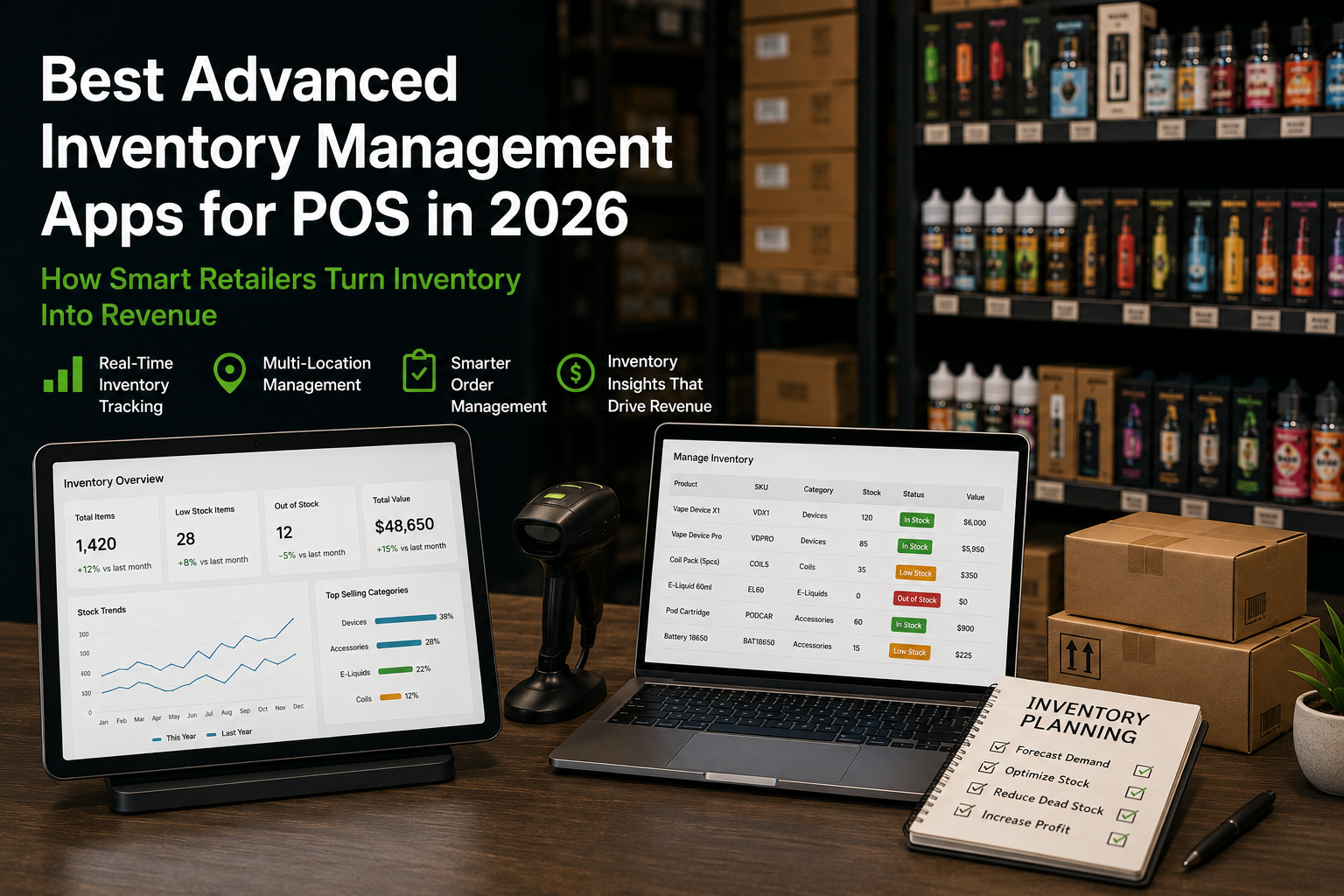
How Smart Retailers Turn Inventory Into Revenue with Loyalty, Smart Discounts, and Multi-Location Intelligence
Inventory management is no longer just about stock counts and warehouse tracking. For modern retailers using Clover POS, inventory directly impacts profitability, customer retention, discount strategy, and multi-location performance.
In 2026, the smartest retailers are not simply tracking inventory they are using inventory data to drive revenue growth. By combining advanced inventory management apps with loyalty platforms and smart promotions, businesses can reduce dead stock, improve margins, and increase repeat purchases.
This guide explores the best advanced inventory management apps for Clover POS and explains how retailers turn inventory into revenue using automation, loyalty rewards, and data-driven promotions.
Why Clover Merchants Need Advanced Inventory Tools
As retailers scale across multiple locations, inventory operations become more complex.
Common challenges include:
- syncing inventory across stores
- forecasting demand accurately
- reducing stockouts and overstocks
- managing large SKU catalogs
- handling transfers between locations
- clearing slow-moving inventory
Basic inventory systems often lack the visibility and automation required for modern retail operations.
Advanced inventory management platforms help retailers:
- gain real-time stock visibility
- automate replenishment
- optimize purchasing decisions
- improve inventory turnover
- track inventory performance across locations
Industry benchmarks estimate that inventory carrying costs can consume 20–30% of total inventory value annually, placing direct pressure on retail margins. At the same time, global stockouts reportedly cost retailers $1.2 trillion annually, making inventory visibility and forecasting critical for profitable growth in 2026.
Best Advanced Inventory Management Apps for Clover POS
Different inventory tools solve different operational problems. The right solution depends on store size, operational complexity, and whether the business operates across multiple locations.
1. Thrive Inventory
Best For:
Advanced retail inventory management for growing and multi-location businesses.
Key Strengths:
- advanced inventory forecasting
- multi-location inventory management
- automated replenishment and purchase orders
- low-stock alerts
- supplier and vendor management
- detailed inventory analytics
Why Clover Merchants Use It:
Thrive Inventory helps retailers manage complex inventory operations while improving stock visibility, forecasting accuracy, and inventory turnover across multiple locations.
2. MarketMan
Best For:
Restaurants and food-service inventory management.
Key Strengths:
- ingredient-level inventory tracking
- supplier management
- food cost optimization
- waste reduction
- purchase order automation
Why Clover Merchants Use It:
Restaurant operators use MarketMan to manage food inventory, control waste, and improve operational efficiency while integrating with Clover POS workflows.
3. SKU IQ
Best For:
Retailers syncing e-commerce and physical inventory.
Key Strengths:
- online + in-store inventory synchronization
- real-time inventory updates
- multi-channel inventory visibility
- simplified catalog management
Why Clover Merchants Use It:
SKU IQ helps retailers unify inventory across online and offline channels while reducing overselling and inventory discrepancies.
Inventory Tracking Alone Is Not Enough
Most inventory discussions focus only on:
- stock counts
- warehouse management
- transfers
- inventory visibility
But smart retailers in 2026 ask a different question:
“How can inventory data increase revenue?”
That shift changes inventory from an operational function into a profitability strategy.
According to retail inventory benchmarks, carrying costs can consume 20–30% of inventory value annually, while stockouts continue to contribute to billions in lost retail revenue globally.
Retailers that only track inventory operate efficiently.
Retailers that monetize inventory intelligently grow profitably.
How Smart Retailers Turn Inventory Into Revenue
The most advanced retailers use inventory data to drive:
- smart discounts
- loyalty campaigns
- customer segmentation
- inventory clearance strategies
- repeat purchase behavior
Inventory becomes a revenue engine, not just a reporting system.
1. Clear Slow-Moving Inventory with Smart Discounts
Studies suggest that 20–30% of inventory in many retail businesses eventually becomes dead or obsolete stock. Excess inventory ties up cash flow, increases storage costs, and forces reactive markdowns that hurt profitability.
Instead of using blanket discounts, retailers now use:
- automated markdown triggers
- category-based promotions
- cashback rewards
- bundle offers
- limited-time incentives
Example Strategy
If inventory remains overstocked for 45+ days:
- automatically trigger cashback rewards
- offer double loyalty points
- launch bundle promotions
This helps retailers:
- clear inventory faster
- protect margins
- increase customer engagement
2. Use Inventory-Based Loyalty Rewards
Retailers increasingly use loyalty incentives and personalized rewards to improve repeat purchases and customer lifetime value.
Instead of discounting products directly, retailers reward specific inventory behaviors.
Examples
- bonus points on slow-moving categories
- cashback on overstocked products
- rewards for bundle purchases
- category-specific loyalty campaigns
Why It Works
Customers feel rewarded while retailers improve inventory turnover and reduce dead stock.
This creates:
- higher repeat purchase rates
- improved inventory movement
- stronger customer retention
- better margin protection
3. Optimize Multi-Location Inventory Performance
Multi-location retailers often struggle with:
- uneven stock distribution
- regional buying differences
- inventory transfer inefficiencies
Advanced inventory systems help retailers:
- identify location-specific trends
- optimize stock transfers
- create regional promotions
- reduce inventory waste
Example
A slow-moving product in one location can become a loyalty-driven promotion in another high-demand market.
This turns inventory intelligence into actionable revenue opportunities.
4. Combine Inventory Data with Customer Behavior
Modern retail growth happens when:
inventory intelligence + customer intelligence work together
Retailers can identify:
- what loyal customers buy most frequently
- which products drive repeat visits
- what inventory creates the highest customer lifetime value
This enables:
- smarter promotions
- targeted campaigns
- personalized offers
- higher average order value (AOV)
Retail operators frequently report stronger repeat purchase performance after implementing loyalty-driven retention strategies tied to customer behavior and inventory data.
Inventory Challenges by the Numbers
- Inventory carrying costs can reach 20–30% of inventory value annually
- Global stockouts reportedly cost retailers $1.2 trillion annually
- Many retailers see 15–25% of inventory become dead stock
- Loyalty members typically spend more and purchase more frequently than non-members
- Overstocked inventory directly impacts cash flow and profitability
The Real Competitive Advantage in 2026
Advanced inventory systems provide:
Operational Visibility
Platforms like RewardUp provide:
Revenue Optimization
That distinction matters.
Inventory platforms help retailers understand:
- what products are moving
- where stock is sitting
- what needs replenishment
RewardUp helps retailers act on that data through:
- smart discounts
- loyalty rewards
- inventory-triggered promotions
- automated customer incentives
Together, these systems help retailers:
- reduce dead stock
- increase repeat purchases
- improve inventory turnover
- protect margins
What Works Best for Clover Merchants
The most successful Clover retailers in 2026 combine:
- advanced inventory management
- automated loyalty rewards
- smart discount automation
- multi-location inventory intelligence
- customer behavior tracking
Together, they create:
Operational Platform + Revenue Engine
TL;DR
Advanced inventory management apps help Clover retailers improve stock visibility, forecasting, and multi-location operations. But the biggest opportunity comes from turning inventory into revenue through smart discounts, loyalty rewards, and automated promotions. Retailers that combine inventory intelligence with platforms like RewardUp can reduce dead stock, increase repeat purchases, and grow more profitably in 2026.
Conclusion
Inventory management is evolving from a back-office operational task into a growth strategy.
Retailers that only track inventory will operate efficiently.
Retailers that monetize inventory intelligently will outperform competitors.
In 2026, the winning strategy is not just better inventory visibility, it’s using inventory data to drive loyalty, automate promotions, and increase revenue across every location.
.jpg)
.jpg)