
How Customer Check-Ins Increase Loyalty and Repeat Visits for Retailers in 2026
.jpg)
Customer check-ins help retailers automatically recognise returning shoppers and reward them for repeat visits. When customers are identified at checkout online or in-store, retailers can trigger loyalty rewards, personalise offers, and build long-term relationships without relying on constant discounts.This guide is for small and mid-sized retailers using Shopify or Clover in 2026 who want to increase repeat visits, improve retention, and grow customer lifetime value without reducing margins through frequent discounts.
What Is a Customer Check-In?
A customer check-in is the process of identifying a shopper when they visit or purchase using a phone number, payment card, POS record, or account login, so the business can track visits and reward loyalty automatically.
Customer check-ins can happen:
- at in-store checkout
- when a card is tapped
- through phone number entry
- through online account login
- via card-linked loyalty systems
Once recognised, the system can apply rewards, track visits, and personalise communication.
Why Check-Ins Matter More in 2026
In 2026, customer acquisition costs continue to rise while advertising performance becomes less predictable due to privacy changes and increased competition. For small retailers, the most reliable growth now comes from repeat customers—not first-time buyers.
Check-ins help retailers:
- recognise returning customers instantly
- measure visit frequency
- reward behaviour automatically
- build retention systems
- track customer lifetime value
Omnichannel customers now spend up to 1.5× more per month than single-channel shoppers, making repeat engagement one of the biggest revenue drivers for retailers.
Without check-ins, retailers cannot reliably identify who is returning and who is not.
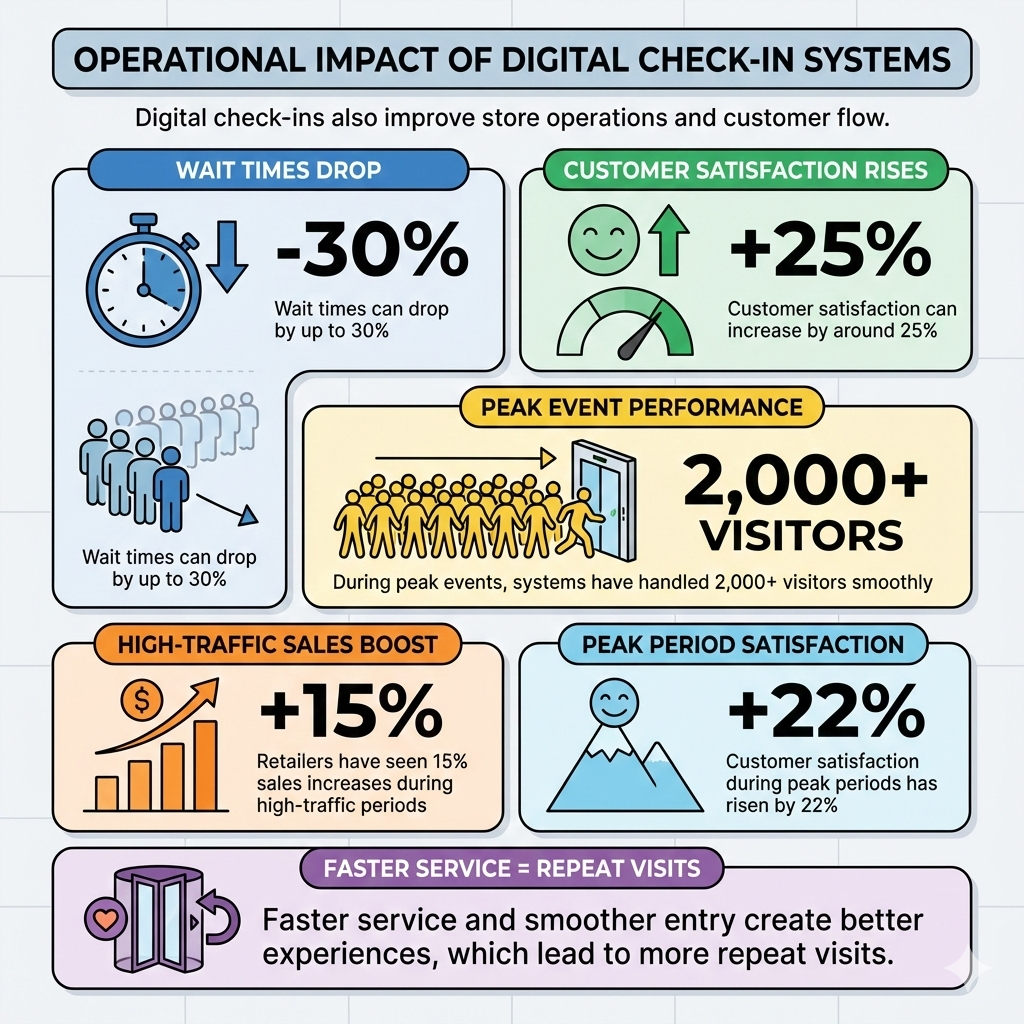
How Customer Check-Ins Increase Loyalty
1. Recognition Builds Habit
Customers are more likely to return when they feel recognized.
When a system identifies them automatically at checkout, it creates familiarity and consistency.
Recognition triggers:
- emotional connection
- brand memory
- trust
- habit formation
Over time, this increases visit frequency
73% of consumers say a good customer experience is a key factor in brand loyalty, which means recognition and personalization directly impact repeat visits.
2. Automatic Rewards Encourage Return Visits
Check-ins allow retailers to reward customers for visits or purchases without manual effort.
Examples:
- earn points per visit
- earn cash back after purchase
- unlock rewards after X visits
- birthday or milestone rewards
These incentives create a reason to return without lowering prices upfront.
3. Check-Ins Enable Data-Driven Retention
Retailers cannot improve retention without data.
Check-ins provide insight into:
- visit frequency
- purchase behavior
- average order value
- time between visits
This data helps merchants:
- identify loyal customers
- re-engage inactive customers
- personalize offers
- track lifetime value
Retailers using loyalty and check-in data typically see 15–25% higher revenue from engaged customers due to targeted promotions and repeat visits.
4. Reduces Dependence on Discounts
Without check-ins, many retailers rely on blanket discounts to bring customers back.
Discounts reduce margins and train customers to wait for sales.
Check-in-based loyalty works differently:
- rewards are earned after purchase
- value is delayed
- margins are protected
- repeat visits increase
5. Creates an Omnichannel Experience
Modern customers shop both online and in-store.
Check-ins connect behaviour across channels, allowing retailers to:
- reward in-store purchases
- reward online orders
- track total spending
- unify customer profiles
Major loyalty ecosystems demonstrate the impact:
Starbucks Rewards members account for around 53% of store spending, showing how identification and rewards drive repeat revenue.
This creates a consistent loyalty experience across Shopify and Clover environments.
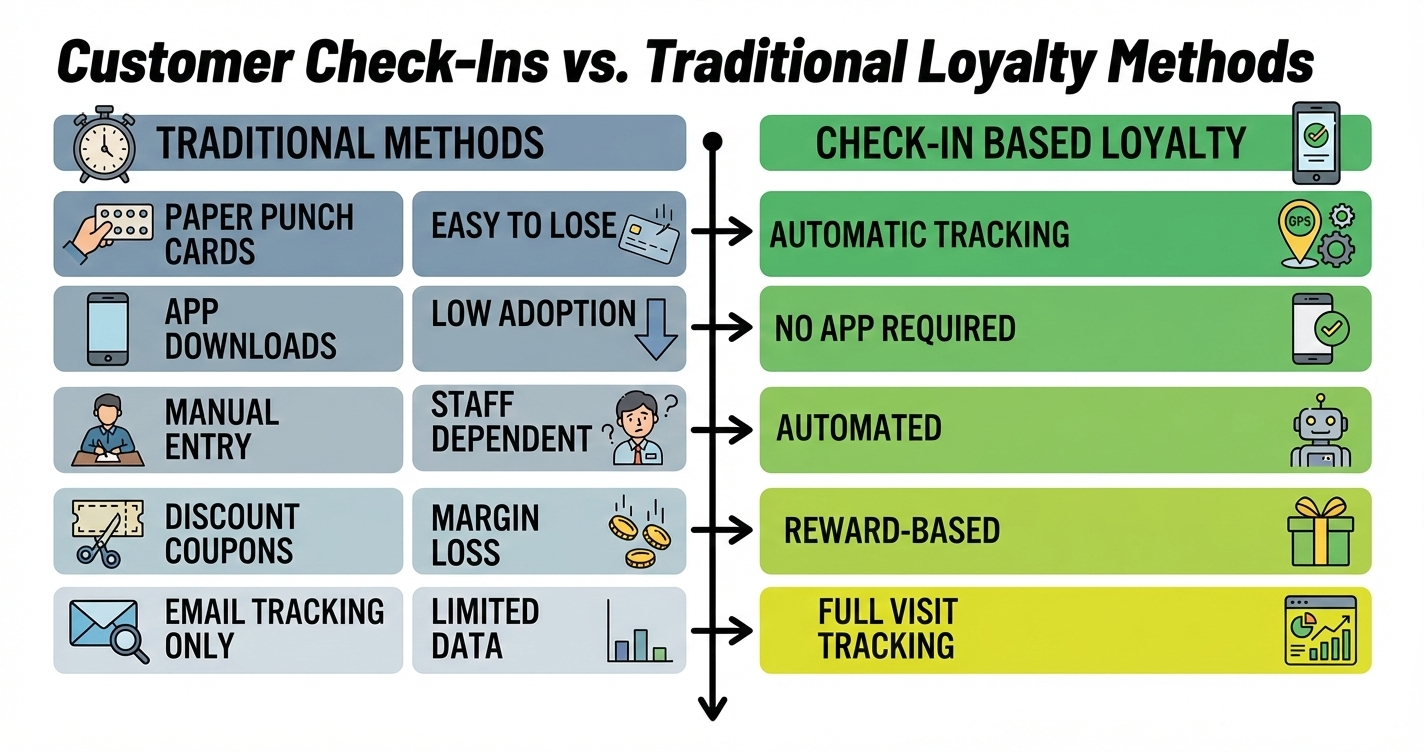
What Works Best in 2026
The most effective customer check-in systems share three traits:
- Automatic recognition
Customers don’t need to scan cards or download apps. - Card-linked or POS-linked rewards
Rewards are triggered by payment or purchase. - Cross-channel tracking
Online and in-store activity is connected.
Retailers using automated check-ins typically see:
- higher repeat visits
- increased customer lifetime value
- better retention rates
- stronger customer relationships
Common Mistakes Retailers Make
Retailers sometimes attempt loyalty programs without proper check-in systems.
This leads to:
- rewards not tracked
- customers forgotten
- inconsistent experiences
- low adoption
- minimal impact on retention
Without reliable identification, loyalty programs cannot function effectively.
TL;DR Summary
Customer check-ins allow retailers to recognize returning shoppers and reward them automatically. This increases repeat visits, improves retention, and reduces reliance on discounts. In 2026, check-in-based loyalty systems are one of the most effective ways for small retailers to grow profitably.
Closing Thought
Platforms like RewardUp enable Shopify and Clover merchants to implement card-linked customer check-ins and automated rewards across online and in-store environments. Customers earn rewards without downloading apps, and retailers gain visibility into repeat behavior, visit frequency, and customer lifetime value.
Retail growth in 2026 is not driven by one-time transactions but by repeat relationships. Customer check-ins make those relationships measurable, rewardable, and scalable, turning occasional shoppers into loyal regulars.
.jpg)